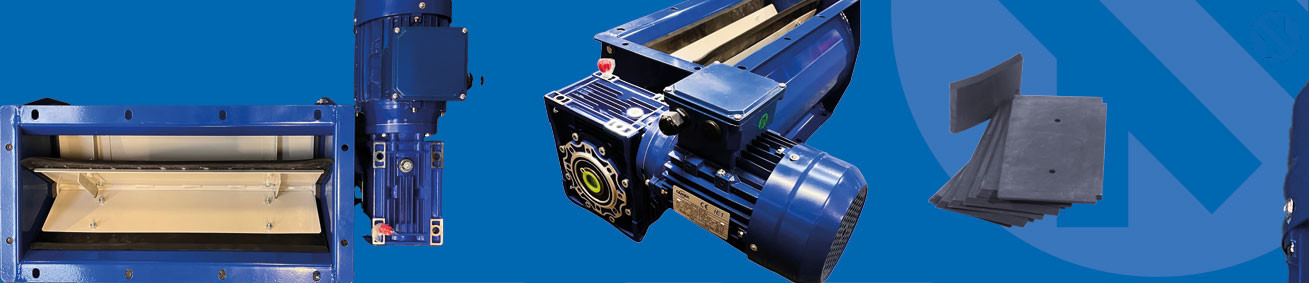
Rotary valve
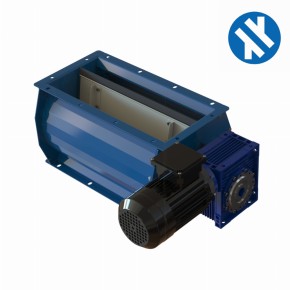
RVLA rotary valve with rubber seal, RAL5010
EUR 1.348,00 - EUR 2.331,00
add. 19 % VAT excl. shipping costs
RVLA rotary valve with rubber seal, RAL5010
EUR 1.348,00 - EUR 2.331,00
add. 19 % VAT excl. shipping costs
RVLA rotary valve with rubber seal, four sizes and capacities from 7.4 to 29.1 m³/h at a 50% fill level.
to article
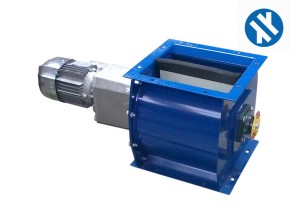
RVA rotary valve category 2D, ATEX-tested, RAL5010
EUR 2.245,00 - EUR 3.901,00
add. 19 % VAT excl. shipping costs
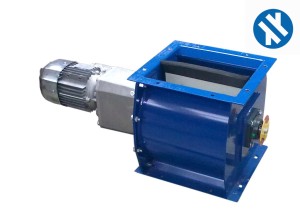
RVA rotary valve category 2D, ATEX-tested, RAL5010
EUR 2.245,00 - EUR 3.901,00
add. 19 % VAT excl. shipping costs
ATEX-tested category 2D RVA rotary valve in five sizes, with capacities from 10 to 63 m³/h at a 50% fill level.
to article
Buy a high-quality rotary valve at WELAfix
A rotary valve is used for the controlled discharge and dosing of bulk solids. With a suitable design, it also allows material to be transferred between sections of a system operating at different pressures. Rotary valves are frequently used in pneumatic conveying systems and beneath filters or cyclones. Versions specifically certified for this purpose can also be used for explosion isolation.
At WELAfix, you can find out what to consider when buying a rotary valve and discover suitable products for your extraction or conveying system.
How does a rotary valve work?
The core of a rotary valve is a rotor with several pockets. It rotates inside the housing and transfers material in a controlled manner from the inlet to the outlet. The pockets receive the bulk material at the inlet and discharge it at the outlet. When appropriately designed, the valve also limits air exchange between the connected sections of the system.
Main components:
- Rotor with pockets
- Housing with clearances suited to the application
- Drive, usually a geared motor
- Bearings and sealing system
Important performance and design characteristics:
- Throughput and dosing performance depending on the bulk material, rotor volume, filling efficiency and rotational speed
- Permissible differential pressure and operating temperature as specified in the technical data
- Materials and wear protection suited to the conveyed product and application
Who can benefit from a rotary valve?
Rotary valves are used in many industries that process powdered or granular materials. The appropriate version depends on the properties of the bulk material and the operating conditions:
- Wood industry: Discharge and dosing of wood flour and sawdust and, with a suitable design, wood pellets
- Food industry: Dosing of flour, sugar, spices and granules using suitable materials and an appropriate hygienic design
- Plastics processing: Transfer of plastic granules and powders
- Chemical industry: Discharge and dosing of chemical powders and granules
- Cement industry: Discharge of cement, lime and mineral materials with suitable wear protection
What should you consider when buying a rotary valve?
Key factors include throughput, bulk material properties, construction materials, permissible pressure conditions, the required explosion protection and maintenance requirements.
1. Throughput
Throughput is specified in m3/h or kg/h. Sizing should account for both normal operation and peak loads. The bulk density of the material is essential when converting between volumetric and mass flow rates. Filling efficiency and flow characteristics also influence the throughput actually achieved.
2. Materials and wear resistance
- Abrasive materials: Suitable wear-resistant or hardened versions
- Chemicals: Chemically resistant materials selected for the specific medium
- Food products: Materials suitable for food contact and a hygienic design meeting the applicable requirements
3. Pressure resistance
Check the permissible differential pressure and operating pressure of the specific rotary valve. Vacuum conditions, possible pressure peaks and the operating temperature must also be considered.
- Standard rotary valves: For applications within the manufacturer's specified pressure limits
- Pressure-rated rotary valves: Versions designed for higher differential pressures
- Explosion pressure shock-resistant versions: Separately assessed resistance to short-duration explosion loads
Explosion pressure shock resistance must not be equated with permissible operating pressure or differential pressure.
4. Explosion protection
For use in potentially explosive atmospheres, the complete assembly, including the drive, must be suitable for the relevant zone and application. If the rotary valve is also intended to provide explosion isolation, a version explicitly certified for this purpose is required. The manufacturer's documentation and the specified conditions of use are decisive.
5. Maintenance requirements
Look for easy access to the rotor, seals and wear parts. Depending on the model, removable components or quick-opening arrangements can simplify maintenance. WELAfix offers a spare parts kit for compatible versions, for example to replace worn sealing lips.
| Criterion | Recommendation | Why is it important? |
|---|---|---|
| Throughput | Match normal operation, peak loads and bulk material properties | Prevent material build-up and insufficient throughput |
| Materials | Select materials suited to the conveyed product and hygiene requirements | Limit wear, corrosion and contamination |
| Pressure resistance | Check operating pressure and differential pressure against the technical data | Prevent overload and excessive air leakage |
| Explosion protection | Check zone suitability and, where required, certified explosion isolation | Meet the requirements of the explosion protection concept |
| Maintenance | Consider accessibility and compatible spare parts | Reduce downtime |
Where are rotary valves used?
Typical applications include pneumatic conveying and the discharge and dosing of bulk solids from filters, cyclones, silos and containers. Specifically certified versions can also perform explosion isolation functions.
Rotary valves in pneumatic conveying
Rotary valves are frequently used for controlled material transfer in pneumatic pressure and vacuum conveying systems. Selection depends on factors including the conveyed product, throughput, pressure conditions and permissible air leakage.
Typical systems and designs:
- Pressure conveying systems where material is fed against positive pressure
- Vacuum conveying systems where material is transferred between areas operating at different pressures
- Blow-through rotary valves where the conveying airflow picks up the material directly
- Versions with adapted clearances and sealing systems to limit air leakage
What role does a rotary valve play in explosion protection?
A rotary valve certified for explosion isolation can prevent an explosion from propagating through the material discharge path. It must be operated, monitored and maintained within its specified limits. Suitability for an ATEX zone alone does not establish suitability for explosion isolation.
Relevant combustible dusts: Examples include wood dust, plastic dust, coal dust, certain metal powders and flour. Whether an explosion hazard exists depends on the material properties and process conditions.
ATEX dust zones:
- Zone 20: An explosive dust atmosphere is present continuously, for long periods or frequently.
- Zone 21: An explosive dust atmosphere occurs occasionally during normal operation.
- Zone 22: An explosive dust atmosphere is unlikely during normal operation and, if it occurs, persists only briefly.
What is the difference between rotary valves and slide gates?
Rotary valves and slide gates perform different tasks. Rotary valves are primarily used for continuous discharge and dosing, whereas slide gates mainly open and close a passage.
| Criterion | Rotary valve | Slide gate |
|---|---|---|
| Dosing function | Continuous material discharge; dosing performance depends on the design and bulk material | Generally used for opening and closing, rather than precise dosing |
| Pressure resistance | Depends on the model and design | Depends on the model and design |
| Explosion protection | Zone suitability and isolation function depend on the version and certification | No inherent protection function; special versions must be assessed separately |
| Application | Discharge, dosing and material transfer | Closing or opening a passage |
| Cost | Depends on size, drive, materials and equipment | Depends on size, drive, materials and equipment |
What types of rotary valves are available?
Rotary valves are available in various designs. The appropriate version depends on the bulk material, conveying method and operating conditions.
- Standard rotary valves: For general discharge and dosing tasks within their technical operating limits
- Tangential rotary valves: Depending on the design, for gentler handling of sensitive granules
- Pressure-rated rotary valves: For applications with higher differential pressures
- Special versions: For example, for food products, pharmaceutical applications, elevated temperatures or abrasive materials
Frequently asked questions about buying a rotary valve
Below you will find answers to important questions about selecting and using a rotary valve.
Which rotary valve is suitable for my bulk material?
- Fine powders: A version with suitable clearances and seals, selected according to flow characteristics and pressure conditions
- Coarse bulk materials: Suitable pocket size and robust construction to reduce jamming
- Abrasive materials: Wear-resistant versions
- Sensitive granules: Appropriately designed versions, such as tangential rotary valves, to reduce product damage
How much maintenance is required?
Maintenance requirements depend on the design, operating hours, bulk material and conditions of use. Inspection and lubrication intervals must follow the manufacturer's operating instructions. Abrasive materials may require more frequent checks. For certified explosion protection versions, particular attention must be paid to the specified inspections and wear limits.
Can a rotary valve be retrofitted?
Retrofitting is often possible if sufficient installation space is available and the connections, throughput, pressure conditions and drive are compatible with the system. For applications involving potentially explosive atmospheres, integration into the explosion protection concept must also be assessed. Contact us if you have any questions about selection or installation.
Zuletzt angesehen
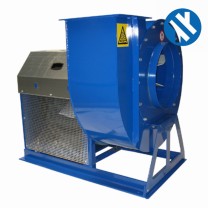
Fan for chip extraction (belt drive)
EUR 3.215,53 - EUR 12.446,68
add. 19 % VAT excl. shipping costs